

Digital marketing in the UAE operates in one of the most connected, diverse and competitive consumer markets in the world. Smartphone use is near-universal, audiences span dozens of nationalities and several languages, and buyers expect polished, mobile-first experiences from brands of every size. This guide to digital marketing UAE businesses can put into practice covers the platforms that matter, how to think about audiences in the Emirates, and the practical approaches that tend to deliver results.
Key takeaways
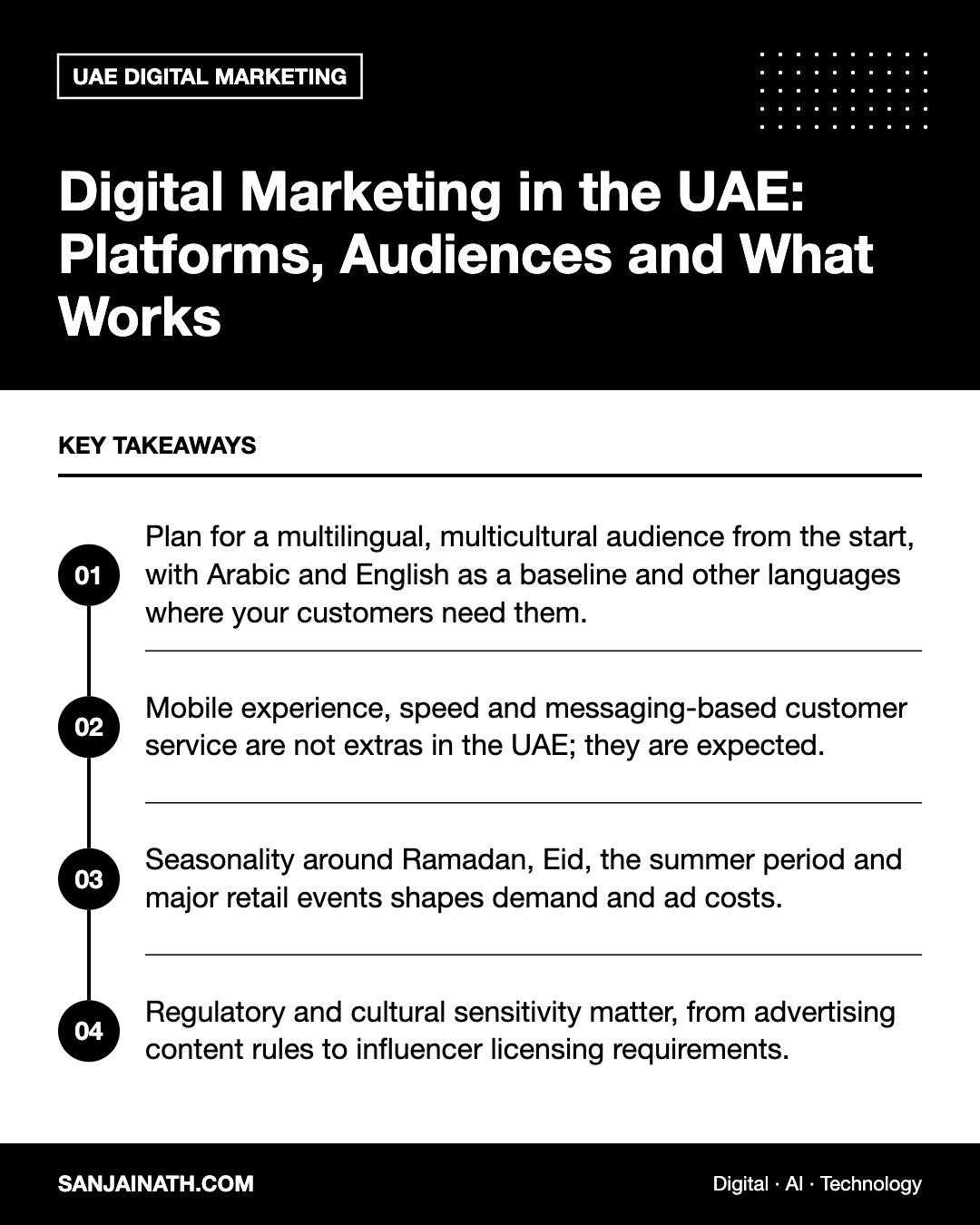
- Plan for a multilingual, multicultural audience from the start, with Arabic and English as a baseline and other languages where your customers need them.
- Mobile experience, speed and messaging-based customer service are not extras in the UAE; they are expected.
- Seasonality around Ramadan, Eid, the summer period and major retail events shapes demand and ad costs.
- Regulatory and cultural sensitivity matter, from advertising content rules to influencer licensing requirements.
Understanding the UAE audience
The UAE population is unusually diverse. Emirati nationals make up a minority of residents, alongside large communities from South Asia, the wider Arab world, Europe, East Asia, Africa and beyond. That means a single persona rarely describes your market. A property developer, a restaurant in Dubai Marina and a B2B software firm in Abu Dhabi may all be targeting completely different language groups, income levels and media habits.
Segmenting by more than demographics
- Language preference: many residents browse in English, but Arabic content builds trust with Emirati and Arab audiences, and languages such as Hindi, Urdu, Malayalam, Tagalog or Russian can open specific communities.
- Residency status and life stage: new arrivals, long-term residents, families and investors have very different needs, from finding schools to buying property.
- Emirate and neighbourhood: Dubai, Abu Dhabi, Sharjah and the northern emirates have distinct commuting patterns, price sensitivities and local habits.
- Visitor versus resident: tourism is a major economic driver, so hospitality and retail brands often need parallel strategies for visitors and residents.
The platforms that matter for digital marketing in the UAE
Most global platforms have a strong presence in the Emirates, but how people use them differs by audience and purpose. The table below summarises typical roles for each.
| Platform | Typical role | Good fit for |
|---|---|---|
| Google Search and YouTube | High-intent discovery, research and video storytelling | Almost every sector, especially property, education, healthcare and services |
| Visual brand building, lifestyle content, influencer partnerships | Hospitality, fashion, beauty, food and real estate | |
| TikTok | Entertainment-led reach, trends and creator content | Consumer brands targeting younger audiences |
| Snapchat | Close-network communication and youth reach, with notable popularity in the Gulf | Retail, entertainment, food delivery and events |
| Professional networking, thought leadership and B2B lead generation | B2B services, recruitment, finance and technology | |
| Customer service, enquiries, bookings and follow-up | Nearly all local businesses |
X (formerly Twitter) remains relevant for news, government communication and some Arabic-speaking audiences, while marketplaces and delivery apps act as important discovery channels for retail and food businesses.
Digital marketing UAE strategies that work
1. Build genuinely bilingual content
Machine-translating English copy into Arabic is a common shortcut and an easy way to lose credibility. Arabic content should be written or adapted by native speakers who understand tone and local expressions. Consider right-to-left layouts on your website and landing pages, and make sure ad creative looks natural in both languages rather than feeling like an afterthought.
2. Design for mobile and messaging first
Many customer journeys in the UAE start on a phone and end in a chat. Click-to-WhatsApp ads, WhatsApp Business catalogues and quick-reply templates can shorten the path from interest to enquiry. Make sure someone is actually available to respond promptly, because slow replies undo the benefit.
3. Plan around the regional calendar
- Ramadan and Eid: media consumption shifts later into the evening, family and generosity themes resonate, and competition for attention rises. Plan creative well in advance and respect the spirit of the month.
- Summer: many residents travel, so some sectors see quieter demand while others, such as travel and indoor entertainment, peak.
- Retail and cultural events: shopping festivals, White Friday, back-to-school, National Day and the winter tourism season all create spikes worth planning for.
4. Use influencers carefully and compliantly
Influencer marketing is well established in the Emirates, but the UAE requires people who promote products or services on social media to hold the appropriate licence or permit. Check that any creator you work with is properly licensed under current rules, agree clear disclosure of paid content, and choose partners whose audience genuinely matches yours rather than chasing follower counts.
5. Invest in local search
A complete, well-maintained Google Business Profile, consistent contact details, genuine reviews and location pages for each branch help you appear when people search for services nearby. Include Arabic business names and descriptions where relevant.
Compliance and cultural considerations
Effective digital marketing UAE campaigns follow rules and expectations that brands must respect. Advertising content should align with local values and media regulations, avoid offensive or culturally insensitive imagery, and treat religion, national symbols and the leadership with respect. Data protection legislation also governs how you collect and use personal information, so review your consent flows, privacy notices and data handling with a qualified adviser.
Regulated sectors such as healthcare, financial services and real estate often have additional advertising requirements from their respective authorities, so check sector-specific guidance before launching campaigns.
Measuring digital marketing UAE performance
Because many conversions happen offline, over the phone or inside WhatsApp, standard website tracking can undercount results. Close the gap with a few habits:
- Track clicks on call and WhatsApp buttons as conversion events in your analytics platform.
- Use unique phone numbers, promo codes or landing pages for different campaigns where practical.
- Log enquiry sources in your CRM and feed qualified-lead data back into ad platforms.
- Report separately by language and emirate so you can see which segments truly perform.
Frequently asked questions
Should I advertise in Arabic, English or both?
For most brands, both. English reaches a broad resident base, while Arabic builds trust with Emirati and wider Arab audiences. Test performance by language and let data guide how you split budget.
Which social platform is best for businesses in the UAE?
It depends on your audience. Instagram and TikTok suit visual consumer brands, LinkedIn suits B2B, and Snapchat can be valuable for younger Gulf audiences. WhatsApp is almost always worth using for customer communication.
Do influencers in the UAE need a licence?
Yes, the UAE requires individuals who advertise on social media to hold the relevant licence or permit. Rules can be updated, so confirm current requirements with the official authorities before contracting creators.
Is SEO still worthwhile in such a paid-media-heavy market?
Absolutely. Organic search builds compounding visibility and trust, and bilingual SEO remains relatively under-invested in many sectors, which creates opportunities for brands willing to do it properly.
Final thoughts
Success with digital marketing in the UAE comes from respecting how varied the market really is. Speak to people in their preferred language, meet them on mobile and messaging, plan around the regional calendar and stay on the right side of local rules. Brands that combine that local understanding with disciplined measurement consistently outperform those that simply copy strategies from other markets.