

LinkedIn is where professionals research suppliers, follow industry conversations and build relationships with potential partners. For companies selling to other businesses, LinkedIn marketing for B2B is one of the most direct ways to reach decision-makers by role, industry and seniority. This practical playbook covers how to set up your presence, create content that earns attention, use advertising wisely and turn engagement into pipeline.
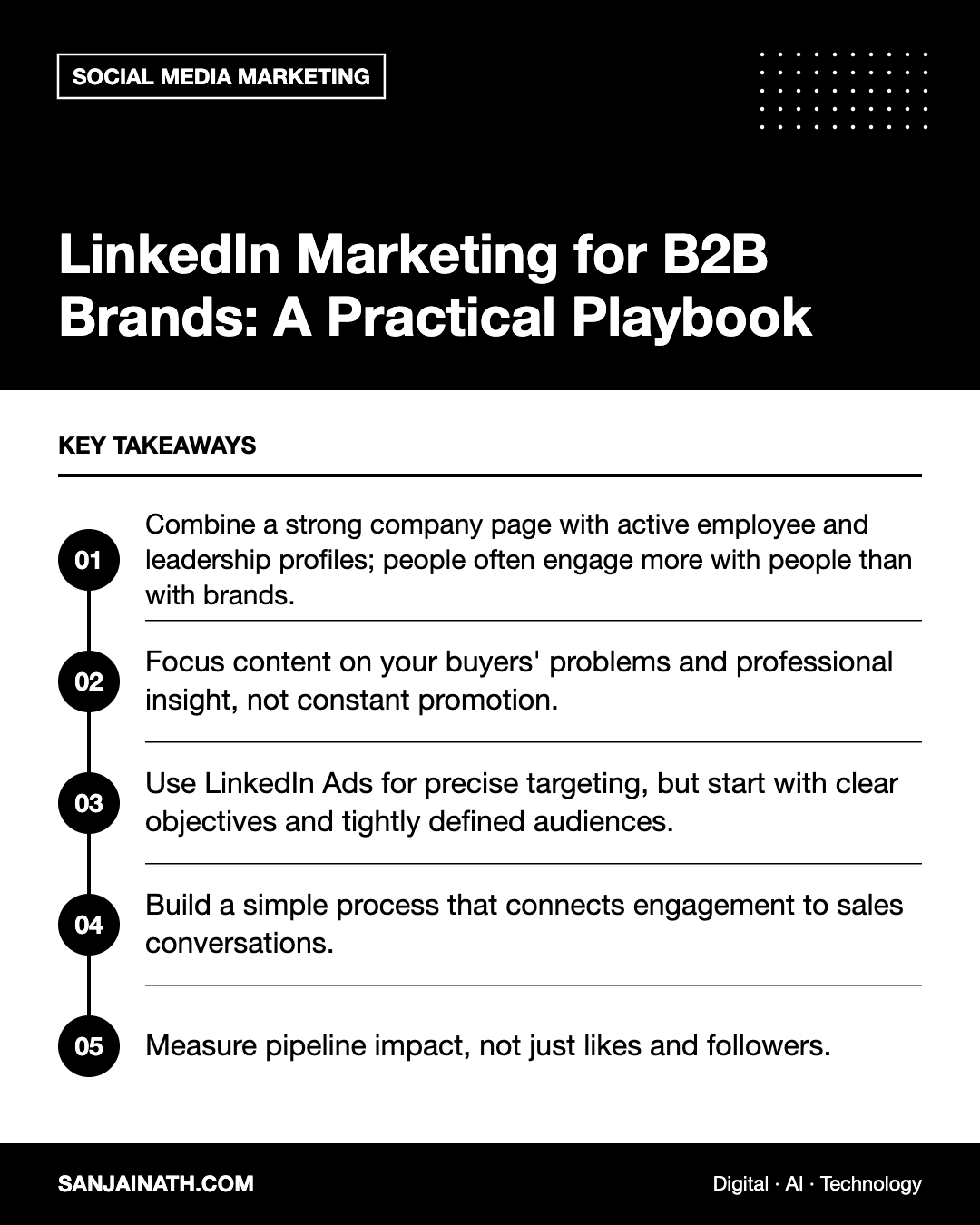
Key takeaways
- Combine a strong company page with active employee and leadership profiles; people often engage more with people than with brands.
- Focus content on your buyers’ problems and professional insight, not constant promotion.
- Use LinkedIn Ads for precise targeting, but start with clear objectives and tightly defined audiences.
- Build a simple process that connects engagement to sales conversations.
- Measure pipeline impact, not just likes and followers.
Why LinkedIn marketing works for B2B
LinkedIn members share professional details such as job titles, industries, company size and skills. That gives B2B marketers targeting precision that is difficult to achieve on other platforms. The environment is also professional by nature: people visit to learn, network and advance their careers, making them more receptive to thoughtful business content.
In the UAE and wider GCC, where business relationships and personal reputation carry significant weight, LinkedIn is often a key channel for building visibility and credibility among senior stakeholders.
Step 1: Optimise your company page
- Clear tagline: state who you help and how, in one line.
- Complete About section: describe services, industries served, locations and what makes you different.
- Professional visuals: a high-quality logo and a cover image that reinforces your positioning.
- Call-to-action button: link to a relevant page, such as a consultation booking.
- Showcase pages: consider these for distinct product lines or audiences.
- Consistency: align messaging with your website and other channels.
Step 2: Activate leadership and employee profiles
Personal profiles typically reach more people organically than company pages, and buyers trust individuals with genuine expertise. Encourage your leadership team and client-facing staff to:
- Update headlines to describe the value they deliver, not just their job title.
- Write an About section focused on the problems they help solve.
- Share insights, lessons and opinions from their work regularly.
- Engage thoughtfully with posts from clients, prospects and industry peers.
Provide optional content ideas and guidance, but let people write in their own voice. Authentic posts outperform obviously scripted ones.
Step 3: Build a content strategy for your buyers
Content pillars
Choose three or four themes that connect your expertise to your audience’s priorities. For example, a cybersecurity firm might focus on regulatory compliance, incident readiness, security culture and practical technology guidance.
Formats that work well
- Text posts sharing a clear insight, lesson or point of view.
- Document or carousel posts that break down frameworks and checklists.
- Short videos featuring experts answering common questions.
- Newsletters for deeper, recurring content that subscribers are notified about.
- Events and live sessions for webinars and panel discussions.
A simple content mix
| Content type | Purpose | Example |
|---|---|---|
| Educational | Build authority | “Five questions to ask before choosing an ERP partner” |
| Perspective | Show thought leadership | Your view on an industry trend and what it means for clients |
| Proof | Build trust | A client outcome story shared with permission |
| Culture | Humanise the brand | Team milestones, behind-the-scenes work |
| Offer | Drive action | Invitation to a webinar, audit or consultation |
Keep promotional posts to a minority. Value-led content earns the attention that makes occasional offers effective.
Step 4: Write posts that stop the scroll
- Open with a strong first line that states a problem, insight or surprising observation.
- Use short paragraphs and white space for readability on mobile.
- Share specific, practical advice rather than generic statements.
- End with a question or clear next step to encourage conversation.
- Reply to comments promptly to extend the discussion.
Step 5: Use LinkedIn Ads strategically
Paid campaigns can accelerate results, but LinkedIn advertising is generally considered a premium channel, so precision matters.
- Set a single objective per campaign, such as awareness, website visits or lead generation.
- Define audiences carefully using job function, seniority, industry, company size and location.
- Consider account-based targeting by uploading a list of priority companies.
- Use retargeting to reach people who visited your website or engaged with your content.
- Test Lead Gen Forms, which pre-fill details from members’ profiles and can reduce friction.
- Refresh creative regularly to avoid fatigue within small audiences.
Step 6: Turn engagement into pipeline
LinkedIn marketing for B2B succeeds when it connects to sales activity. Build a light, respectful process:
- Review who engages with your posts and ads, and identify people who match your ideal customer profile.
- Connect with a personalised note referencing a shared interest or their comment, not an immediate sales pitch.
- Offer genuinely useful resources or conversations before asking for a meeting.
- Pass warm leads to sales with context about what they engaged with.
- Record LinkedIn-sourced leads in your CRM to track outcomes.
Step 7: Measure what matters
- Visibility: impressions, follower growth and profile views among target audiences.
- Engagement quality: comments and shares from relevant decision-makers, not just total likes.
- Conversions: website visits, form submissions and event registrations.
- Pipeline: meetings booked, opportunities created and revenue influenced.
Common mistakes B2B brands make on LinkedIn
- Posting only company news: announcements matter, but a feed of press releases gives buyers little reason to follow.
- Automated connection spam: mass, generic connection requests followed by immediate sales pitches damage reputation.
- Inconsistent activity: bursts of posting followed by weeks of silence make it hard to build an audience.
- Ignoring comments: failing to reply to thoughtful comments wastes the conversations your content has started.
- Overly broad ad targeting: audiences that are too wide dilute budget and attract unqualified leads.
Frequently asked questions
How often should a B2B company post on LinkedIn?
Consistency matters more than volume. Posting a few times a week from the company page, supported by regular posts from key individuals, is a sustainable starting point for many teams.
Is LinkedIn marketing for B2B worth it for small companies?
Yes. Organic content from founders and experts costs little but can build significant credibility. Small companies can add targeted ads once they have proven messaging.
Should we post from the company page or personal profiles?
Both. The company page provides credibility and a home for brand content, while personal profiles usually generate more reach and trust.
What is the best LinkedIn ad format for lead generation?
Lead Gen Forms are popular because they reduce friction, but test them against landing pages to see which produces higher-quality leads for your business.
Final thoughts
LinkedIn marketing for B2B rewards patience, expertise and genuine engagement. Build a credible company presence, empower your people to share insight, use ads with precision and connect every conversation to your sales process. Done consistently, LinkedIn becomes a dependable engine for relationships and pipeline.