

Generative engine optimization (GEO) is the practice of shaping your content and brand presence so that AI-powered search tools, such as AI summaries in search results and conversational assistants, understand, trust and cite you. As more people ask questions directly to AI systems, being mentioned in the answer can matter as much as ranking in a list of links. This guide explains how GEO works and the practical steps that improve your chances of being cited.
Key takeaways
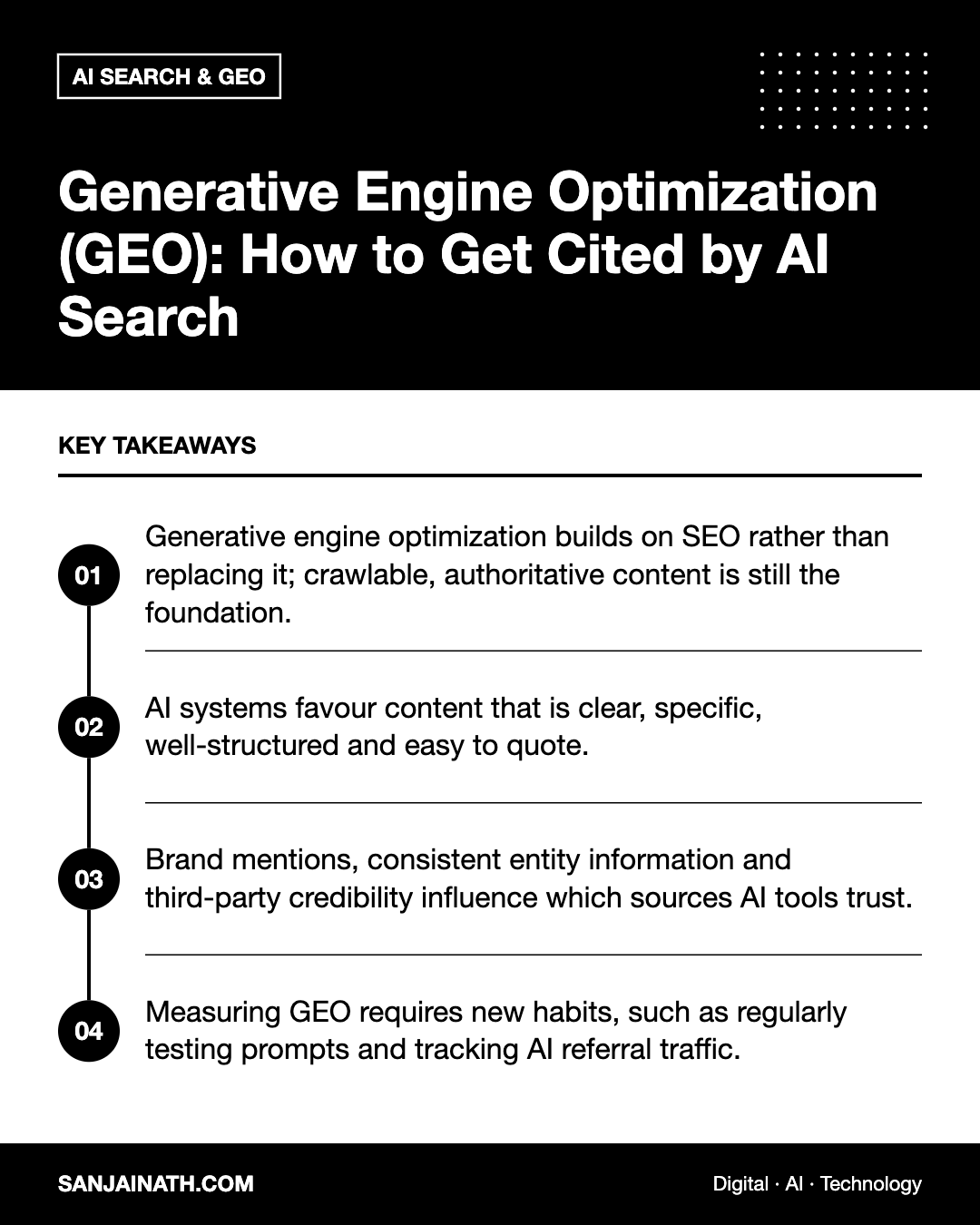
- Generative engine optimization builds on SEO rather than replacing it; crawlable, authoritative content is still the foundation.
- AI systems favour content that is clear, specific, well-structured and easy to quote.
- Brand mentions, consistent entity information and third-party credibility influence which sources AI tools trust.
- Measuring GEO requires new habits, such as regularly testing prompts and tracking AI referral traffic.
What is generative engine optimization?
Traditional search engines return ranked lists of pages. Generative engines synthesise an answer from multiple sources and may display citations or links alongside it. Generative engine optimization focuses on becoming one of those sources.
The underlying systems vary. Some retrieve live web results and summarise them; others draw on what the model learned during training; many combine both. In each case, your goal is the same: make your content the clearest, most credible and most relevant material available on a topic.
How AI search chooses what to cite
No provider publishes a complete formula, but the observable patterns are consistent with long-standing search principles:
- Retrievability: the page must be accessible to crawlers and indexed by the search systems AI tools rely on.
- Relevance: the content must directly address the question, often a specific, conversational one.
- Extractability: clear statements, definitions, lists and tables are easier to lift into an answer.
- Credibility: sources with recognised expertise, author transparency and third-party mentions are more likely to be trusted.
- Freshness: for time-sensitive topics, current information is preferred.
GEO vs SEO: what changes and what stays the same
| Aspect | Traditional SEO | Generative engine optimization |
|---|---|---|
| Goal | Rank highly and earn clicks | Be cited or mentioned within AI answers |
| Query style | Short keywords | Longer, conversational questions |
| Content unit | Whole page | Passages, facts and definitions |
| Authority signals | Links and relevance | Links, mentions, entity consistency and expertise |
| Measurement | Rankings, clicks, conversions | Citations, brand mentions, AI referral visits |
The overlap is large. Most GEO improvements also strengthen classic SEO performance.
Step 1: Build content around real questions
Start by listing the questions your customers ask before buying: in sales calls, support tickets, WhatsApp enquiries and on social media. Group them into themes and create content that answers each one thoroughly.
- Write headings that mirror natural questions, such as “How long does a website migration take?”
- Answer directly in the first one or two sentences under each heading, then expand.
- Cover follow-up questions a curious reader would naturally ask next.
Step 2: Make your content easy to quote
AI systems work with passages. Help them by writing self-contained, precise statements.
- Define terms clearly: “X is…” sentences are highly extractable.
- Use numbered steps for processes and bulleted lists for options.
- Add comparison tables where readers weigh alternatives.
- Include specific details, such as requirements, timeframes you can stand behind, or criteria, rather than vague generalities.
- Summarise key takeaways at the top of long articles.
Step 3: Strengthen your entity and expertise signals
AI tools need to understand who you are. Consistency helps them connect the dots.
- Use the same brand name, description and contact details across your website, social profiles and directories.
- Publish detailed author bios that explain real experience and credentials.
- Maintain a thorough About page and use Organisation and Person schema markup.
- Reference original data, first-hand experience or case examples from your own work where you can.
Step 4: Earn mentions beyond your own website
Generative answers often draw on multiple sources, including reviews, forums, news sites and industry publications. Your reputation elsewhere shapes whether you are included.
- Contribute expert commentary to trade publications and regional business media.
- Participate genuinely in relevant communities and discussion platforms.
- Encourage satisfied customers to leave detailed reviews.
- Seek inclusion in reputable comparison articles and industry lists.
For businesses in the UAE and GCC, publishing in both English and Arabic, and appearing in regional directories and media, can help AI tools associate your brand with local queries.
Step 5: Keep the technical basics solid
- Ensure important content is available in HTML, not hidden behind scripts or logins.
- Review robots.txt rules and decide deliberately which AI crawlers you allow.
- Maintain fast load times and clean site structure.
- Add structured data, such as Article, FAQ, Product and LocalBusiness, where relevant.
- Display clear publication and update dates.
How to measure generative engine optimization
GEO measurement is still maturing, so combine several signals:
- Prompt testing: maintain a list of important questions and check monthly how major AI tools answer them and whether you are cited.
- Referral traffic: monitor visits from AI assistants and AI search features in your analytics.
- Brand searches: rising branded search volume can indicate growing visibility in AI answers.
- Lead source questions: add “How did you hear about us?” options that include AI assistants.
Common GEO mistakes to avoid
- Chasing tricks: hiding text for AI crawlers or stuffing pages with repeated phrases is unlikely to help and may damage trust with both search engines and readers.
- Thin, generic content: AI systems already know generic information. Content that adds specific expertise, local knowledge or first-hand experience is more likely to be valued.
- Inconsistent brand details: conflicting names, descriptions or service lists across the web make it harder for AI tools to describe you accurately.
- Ignoring outdated pages: old prices, discontinued services or superseded advice can be surfaced in AI answers long after you have moved on. Update or redirect them.
- Measuring only clicks: AI answers may mention your brand without sending a visit, so track mentions and brand search as well as traffic.
A 30-day starter plan
- Week one: list your 20 most important customer questions and test how AI tools currently answer them.
- Week two: rewrite your key service pages with direct answers, clear definitions and FAQs.
- Week three: audit brand consistency across your website, profiles and directories.
- Week four: plan two pieces of original, expert content and one outreach activity to earn third-party mentions.
Frequently asked questions
Is generative engine optimization replacing SEO?
No. Generative engine optimization extends SEO. AI search tools still rely on crawlable, relevant and trusted content, so strong SEO remains the foundation for GEO success.
How long does GEO take to work?
Results vary. Content that is retrieved live can be cited soon after it is indexed, while influence on AI models’ broader knowledge builds more slowly through sustained reputation and mentions.
Should I block AI crawlers?
It depends on your goals. Blocking them may protect some content but can reduce your visibility in AI answers. Many businesses allow crawling of marketing content while protecting premium or private material.
Do small businesses need GEO?
Yes, particularly for local and niche queries. Clear, specific content about your services and area can help AI tools recommend you when customers ask for options.
Final thoughts
Generative engine optimization rewards the same qualities people value: clarity, expertise and trustworthiness. Answer real questions directly, structure your content for easy extraction, build a consistent reputation across the web and track how AI tools describe you. Brands that start now will be better placed as AI search continues to grow.
One Comment:
AEO: How to Structure Content for ChatGPT & Gemini Answers
[…] The evidence supports this. In the KDD 2024 study that introduced generative engine optimization, adding quotations, statistics and source citations raised a page’s visibility in AI-generated answers by up to about 40% (Aggarwal et al., 2024). Google, for its part, says there are no special requirements for AI Overviews or AI Mode beyond being indexed and eligible for a snippet (Google Search Central), so answer-first formatting works best on top of solid SEO. For the wider strategy, see how to get cited by AI search. […]